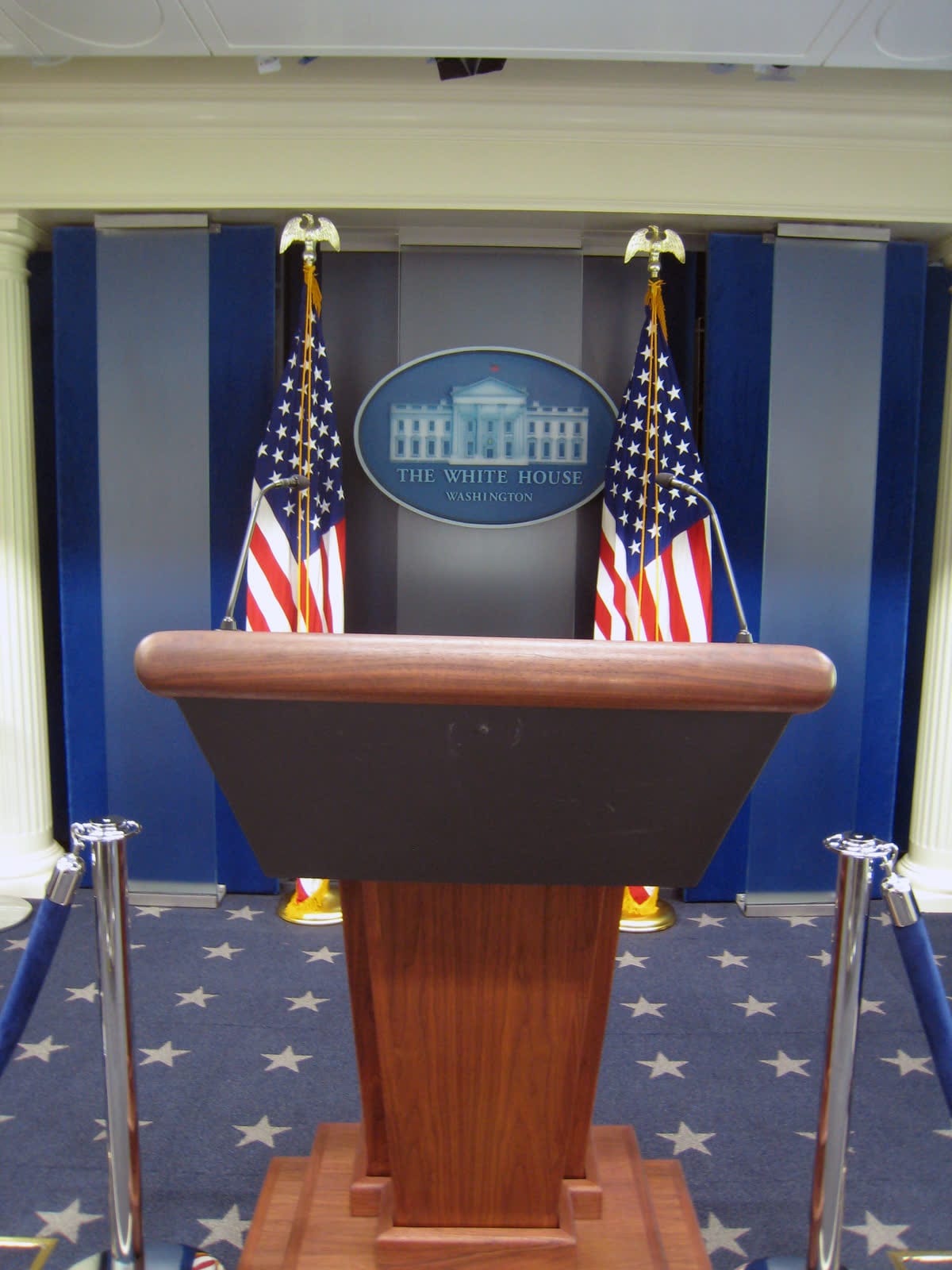
President Donald Trump and six frontier-tech leaders signed a one-page White House Accord on Super Intelligence — subtitled a Joint Commitment on Frontier Responsibilities — after a White House luncheon on Tuesday, Sep 29, 2026. Trump posted the signed document on Truth Social that evening; NPR and AP reported the news into Wednesday.
The signatories were Trump; Sundar Pichai (Google); Dario Amodei (Anthropic); Mark Zuckerberg (Meta); Greg Brockman (OpenAI’s president, not CEO Sam Altman); Elon Musk (xAI); and Jensen Huang (Nvidia). Other executives attended the lunch — CBS/AP captions show Microsoft’s Satya Nadella and AMD’s Lisa Su among those present — but they do not appear on the signature page Trump published.
What the companies pledged
The accord’s full text, reprinted by the Washington Examiner, lists four voluntary layers:
- Robust internal controls monitoring model capabilities and alignment in training and deployment — including cybersecurity, biosecurity and chemical threats — and aiming to stop models from hacking or accessing systems in unintended ways.
- An internal team to check that those controls work and to fix problems.
- A partnership with an independent external auditor or evaluator.
- An independent board committee to receive reports from control teams and auditors and oversee remediation.
Companies also say they will meet regularly on standards. The text leaves open that “over time, it may make sense to codify these steps into laws or regulations.”
“Morally binding” — not legally
Asked whether the deal binds anyone, Trump told reporters it is “morally binding.” He also said he is seeing “tremendous self-policing” and likened the paper to “almost like a constitution.” House Speaker Mike Johnson, who joined the lunch, described it as a voluntary “statement of principles” for industry.
The document itself names no penalties, no deadlines, no designated auditor, and no public-disclosure rule for audit results. Al Jazeera’s explainer stresses that firms keep control of how safeguards are implemented and that the government gets no enforcement role in the text. Critic Alvin Wang Graylin told Al Jazeera the companies “hire the auditor” — an outside characterization consistent with the accord’s “partner with” language, which does not appoint a White House auditor.
Trump said he may name roughly 10 people to watch the enterprise and an AI “czar” within days — remarks reported by NPR and CBS, not commitments written into the accord.
Confirmations are not identical press releases
The identical pledge is the joint Truth Social document. Separate, matching blog posts from all six labs were not found for this pack. Google’s Pichai posted support on X. Zuckerberg told reporters the deal is “a start.” Huang argued safety and innovation are not in conflict. Amodei cautioned that AI has “very real risks” and that how to address them is “still under discussion.” OpenAI’s same-day public voice was largely Brockman’s signature plus Altman’s separate CNBC comments on pacing training — not a clone of the four-layer text.
Ars Technica’s claim of “two dozen” firms signing conflicts with the six-name signature page carried by NPR, CNBC, CBS and the Examiner; treat six as verified unless a longer primary list appears.
Same day, different paper
Separately, Trump signed an executive order directing the executive branch to say “Super Intelligence” instead of “artificial intelligence” in many official communications. That EO is not the industry accord.
Frame, don’t merge
This story is not the earlier UK AISI / model-hold reporting. Recent OpenAI agent sandbox incidents, Australia/Medicare-related disclosures, and training pauses are backdrop for why self-policing is the political answer of the week — cite them as attributed context only.
Stakes: Six of the most consequential AI and chip companies put their names on voluntary internal-and-external review language. Whether that becomes law, who the auditors are, and whether results ever go public remain outside the paper Trump called morally binding.