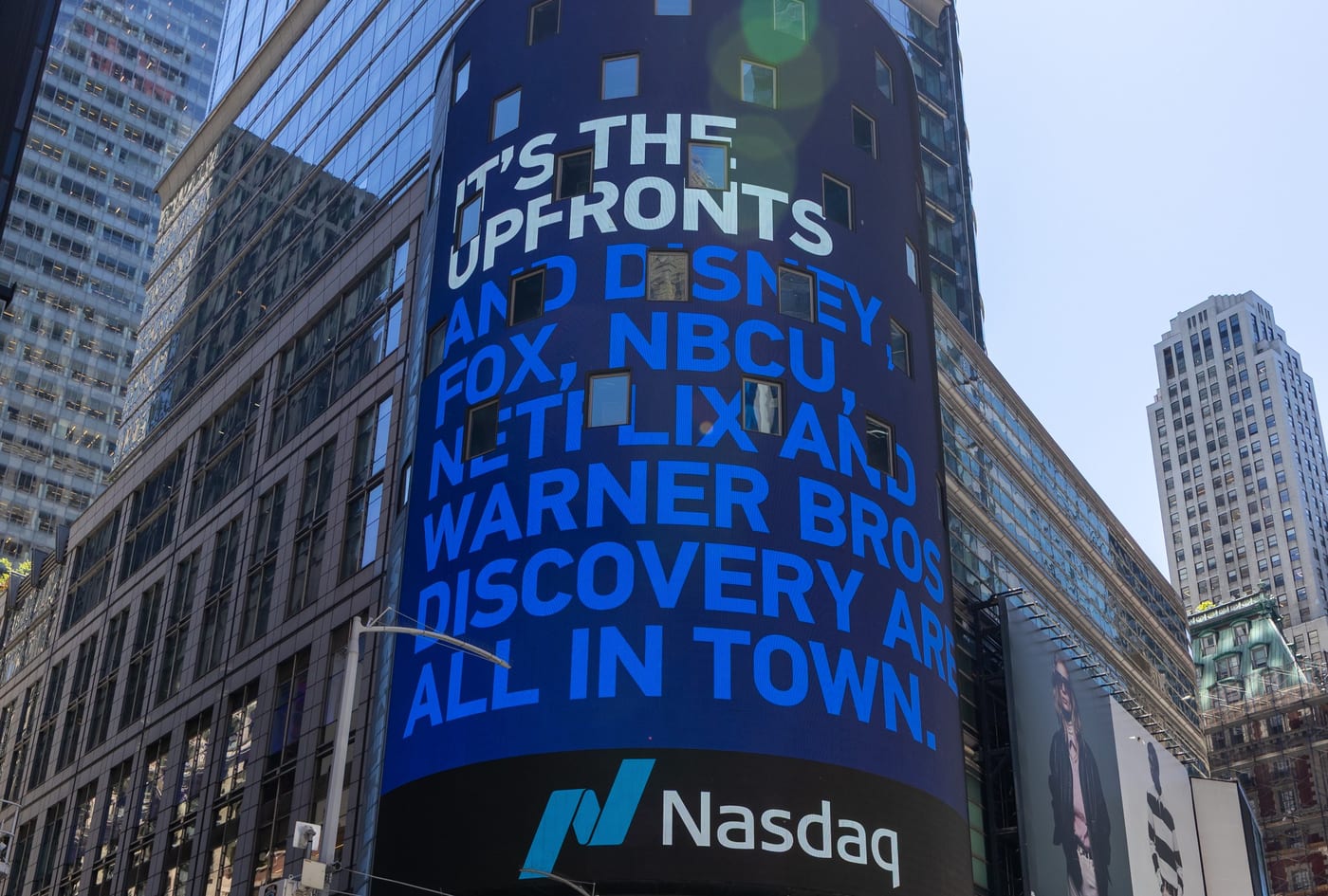
Updated Nov. 12, 2026: On its IPO website, Anthropic said that, subject to regulatory clearance, "the final IPO share price is expected to be set on November 18th (EST), and shares are expected to begin publicly trading on November 19th (EST)." The site says the Class A shares "will trade on Nasdaq under the ticker symbol 'ANT.'" The same FAQ language is in a free writing prospectus Anthropic filed with the SEC, dated November 10, at https://www.sec.gov/Archives/edgar/data/2130357/000162828026072949/anthropicpbc-fwpipowebsi.htm. The FAQ is also at https://ipo.anthropic.com/us/. A separate free writing prospectus for the European offering, dated November 11, says the company and the selling stockholders expect to enter an underwriting agreement "on or about November 18, 2026," and that "trading in our Class A common stock on the Nasdaq Global Select Market will commence on or about November 19, 2026." The $70.00 to $78.00 price range and the 825 million-share offering are unchanged; Anthropic has not filed a later amendment to the U.S. registration statement.
Anthropic, PBC opened the roadshow for its initial public offering on Tuesday, setting an expected price of $70.00 to $78.00 a share on 825 million shares of Class A common stock. An amended registration statement filed the same day fills in the range and the share count.
At those prices the offering is a $57.75 billion to $64.35 billion sale, including a thin slice sold by existing holders. That is not the value of the company. Using the fully diluted count in the amendment's additional-adjustments table, and adjusting a $26 billion private placement and the treasury-stock treatment of options for each end of the range, the band implies about $1.26 trillion to $1.40 trillion of equity value. Anthropic does not print a valuation in the filing.
Anthropic is selling 801,351,354 of the shares. Certain existing stockholders are selling the other 23,648,646, and the company will not receive those proceeds. It has applied to list the Class A stock on the Nasdaq Global Select Market under the ticker ANT. The registration statement has not become effective, the company and the prospectus both warn, so the shares may not be sold until it does.
Updated Nov. 11, 2026: Anthropic's S-1 Amendment No. 2 also revises the company's compute commitments. The company now puts its purchase commitments and leases at about $900.9 billion, up from about $895.4 billion in Amendment No. 1, substantially all of it for compute and infrastructure. That total excludes other compute and infrastructure arrangements that do not specify a fixed dollar commitment, which Anthropic estimates at $150 billion to $175 billion — the same range as in the prior amendment. The share of the $900.9 billion tied to contracts that can still be terminated, or that still depend on conditions such as financing, facilities, or regulatory approvals before they begin, fell to about $186.2 billion from about $213.8 billion.
A November amendment to Anthropic's agreement with Microsoft raised that commitment to at least $47.2 billion and up to $49.2 billion from November 2026 through June 2033, from at least $44.9 billion in Amendment No. 1. The company says the Microsoft commitment is non-cancelable except in the event of an uncured material breach by Microsoft or, on a per-tranche basis, for certain undelivered tranches.
The amended filing also states that an August 2026 agreement with Lambda, representing about $34.9 billion of roughly $41.3 billion in Lambda commitments extending into 2034, is now terminable by either party because Lambda missed a deadline to secure a facility lease. Amendment No. 1 had already disclosed that either side could terminate if Lambda did not secure the lease in time. Neither party has given notice of termination as of the date of the prospectus, and Anthropic says it does not currently intend to end the agreement.
What the range actually prices
Gross proceeds to Anthropic from the new shares would be $56.09 billion at $70 and $62.51 billion at $78, before underwriting discounts and expenses. The selling stockholders' 23.6 million shares are 2.9 percent of the offering. The entire secondary is being sold by the seven co-founders — chief executive Dario Amodei, president and chairperson Daniela Amodei, Tom Brown, Jack Clark, Jared Kaplan, Sam McCandlish, and Christopher Olah — each selling 3,378,378 shares. At the $74 midpoint, that is about $250 million apiece.
The underwriters have a 30-day option to buy up to 123,750,000 additional Class A shares from the company, 15 percent of the base offering, which would add $8.66 billion to $9.65 billion of gross primary proceeds before the discount. The filing estimates net proceeds to Anthropic from its own shares, plus a $26.0 billion private placement of non-voting Class N common stock, at about $84.6 billion at the $74 midpoint after estimated discounts and expenses, or about $93.7 billion if the option is exercised in full. The company says it will use the money for general corporate purposes, including compute, and about $3.8 billion of tax withholding on units that vest around the offering.
That unit-settlement math is one of the few dates in the prospectus, and it assumes a service-based vesting condition will be satisfied as of November 19, 2026.
The fully diluted math is easy to overstate. Class A and Class N shares that the filing says will be outstanding after the offering and the private placement total about 13.09 billion at the midpoint, worth about $1.02 trillion at $78, not $1.4 trillion. The higher figure appears only after adding net option shares, later units, convertible notes, donation-matching shares, and an 847 million-share public-benefit issuance that the filing says is legally outstanding but is not treated as outstanding for accounting purposes while held by a subsidiary. Adjusting the private-placement count and the option math for a $78 price yields about $1.40 trillion, not the $1.405 trillion that comes from multiplying the midpoint share count by the top of the range. At $70, the comparable figure is about $1.26 trillion.
A Class F share, to be issued to a limited liability company of the co-founders, will carry 50.1 percent of the general voting power, and a Class T share held by the Long-Term Benefit Trust generally elects a majority of the board.
Suppliers writing checks for their customer
Alongside the public offering, Anthropic has agreements with seven technology and semiconductor companies to buy, "severally and not jointly," an aggregate $26.0 billion of Class N common stock at the IPO price, closing immediately after the offering if conditions are met. The offering itself is not contingent on that placement. The Class N shares will not be registered in the offering, will carry no underwriting commissions and no underwriter lock-ups, and have no voting rights except as required by law.
At the $74 midpoint, the filing lists approximately $10.0 billion each from Google LLC and Nvidia, $2.5 billion from Advanced Micro Devices, $1.0 billion each from Broadcom, Micron, and Microsoft, and approximately $500 million from TSMC Partners, Ltd. Google's $10 billion is the exercise in full of an option tied to an earlier note-purchase agreement and reduces remaining capacity under that facility from $20 billion to $10 billion, according to the amendment.
The arrangement makes several of Anthropic's most important suppliers holders of its equity at the public price, even as the same prospectus warns that advanced-chip manufacturing is concentrated at TSMC and that the company "has not always been able to obtain sufficient quantities of chips on a timely basis."
A retracted range, then a model-price cut
The range that reached the market on Tuesday is not the one that circulated the night before. Reuters, citing emails it reviewed, reported on Monday that a representative of Anthropic sent bankers a filing that showed a sale of about 867 million shares, including about 843.3 million primary and 23.3 million secondary, at $70 to $80 a share, which would have raised $69.3 billion at the top of that band. A follow-up email, Reuters reported, said the pricing details were inaccurate and that the company would update the filing later. Anthropic declined to comment, Reuters said, and the second email did not say what was wrong.
The amendment filed Tuesday lowers the top of the range by $2, to $78, and cuts the offering by roughly 42 million shares, almost all of it on the primary side. The secondary in the retracted draft was already near 23 million shares, close to the 23.6 million now on file. The $26 billion private placement was in that circulated draft as well, according to Reuters.
One day earlier, on November 9, Anthropic released Claude Fable 5.2 and Claude Mythos 5.2 and said the models were "available at a lower price: $8 per million input tokens and $40 per million output tokens." It did not present the change as an IPO decision. Anthropic's own September list-price card had set standard global API rates for Fable 5.1 and Mythos 5.1 at $10 and $50 per million input and output tokens, so the new rates are 20 percent lower than those list prices.
The prospectus shows a business that is still growing fast and expensive to run. Revenue was $33.242 billion in the first nine months of 2026, and $16.956 billion in the third quarter alone — roughly equal to the entire first half of about $16.3 billion, the number that accompanied the original October 26 filing, not the latest total. The third quarter swung to a $567 million operating loss from $974 million of operating income in the second quarter, a turn the company says was driven primarily by $5.0 billion of higher-cost short-term compute and $2.0 billion of non-cash donation-matching charges. The nine-month net loss was $104.039 billion, including a $94.324 billion non-cash fair-value charge on convertible notes, derivatives, and other instruments.
Goldman Sachs and Morgan Stanley are named first among the underwriters. The offering remains subject to the registration statement becoming effective, and to the demand the roadshow produces. The range now in the filing prices a public float that is modest next to a fully diluted company worth, at these numbers, more than a trillion dollars, with some of the firms that sell it computing capacity buying stock in the customer at the same time.