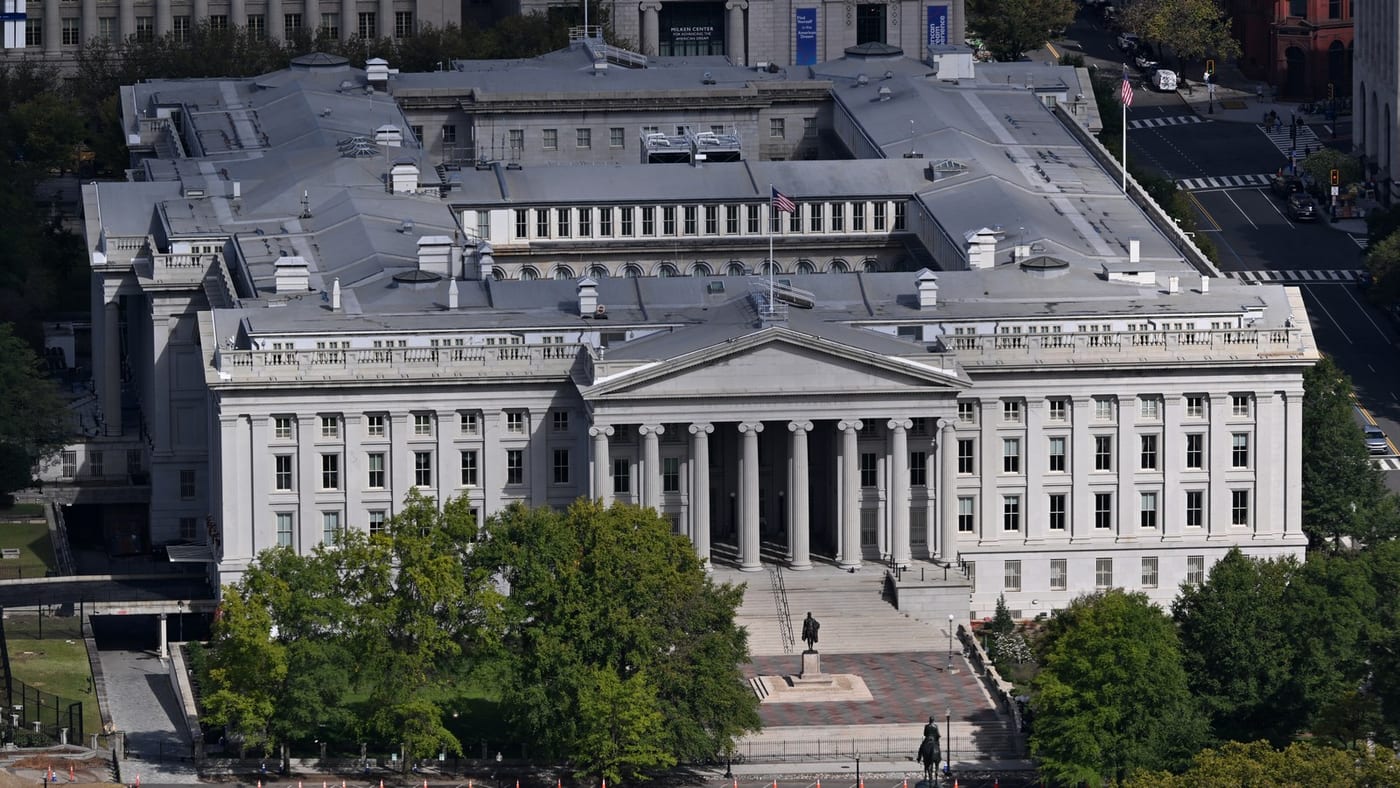
The Treasury Department has proposed barring Americans from investing in any company tied to China or other "countries of concern" that develops artificial intelligence. The proposal would replace the computing-power tests in the current outbound-investment rules with a flat prohibition.
The proposed rule, released Oct. 22 and published in the Federal Register on Oct. 26, implements the Comprehensive Outbound Investment National Security (COINS) Act. Congress passed the law in December 2025 in the annual defense bill. Treasury is taking public comments until Dec. 7. According to Treasury's fact sheet, the proposal has no legal force on its own, and a final rule will set the date it takes effect.
From thresholds to a ban
Under the rules in force since Jan. 2, 2025, whether a deal with a Chinese AI developer is banned, reportable or allowed depends largely on how much computing power trained the model and what it is built to do. Models trained with more than 10^25 operations are off limits, and those above 10^23 must be reported, according to those rules.
The new proposal drops that approach. "No single measure, benchmark, or threshold is currently sufficient to distinguish advanced models," Treasury wrote. It cited gains from synthetic data and new post-training techniques. Instead, the draft lists "development of any SI system" as a prohibited technology. "SI" stands for "super intelligence." A Sept. 29 executive order directs agencies to use that term in place of "artificial intelligence," the rule notes.
Treasury's fact sheet says the change "would eliminate the existing notification requirement," so AI deals that need only a filing today would be banned.
Agents count
The draft definition covers any "software, hardware, application, tool, or utility" that runs on an AI system, "including an SI agent harness," as well as AI-driven robots, drones and autonomous vehicles, according to the proposed text.
For companies building on another firm's model, the test is whether they "enhance or extend" its capability. The rule's own example: "developing an agentic harness layer with a third-party SI model" counts as development. Using an off-the-shelf model "strictly for internal, non-commercial purposes," including fine-tuning it for that use, does not count "solely on that basis."
The law firm Ropes & Gray summed it up in a client alert: "Enhancing or extending a third-party model would count as development."
Who is covered
The ban applies to "covered foreign persons," according to the proposal and Treasury's fact sheet. That includes companies incorporated or headquartered in China, Hong Kong or Macau. It includes citizens and permanent residents of those places who are not also U.S. citizens or green-card holders. It also covers companies at least 50% owned by any of them. A U.S.-incorporated startup can count too: Treasury's example is a company whose chief executive "resides and primarily manages the business" in a country of concern.
The other countries of concern are Cuba, Iran, North Korea and Russia. Treasury says Venezuela no longer qualifies because the Maduro government named in the law "no longer exists."
What stays open
Several carve-outs remain. Publicly traded securities, index funds, mutual funds and ETFs are excepted, according to the proposal. So are limited partners in non-U.S. venture or private equity funds who have committed $2 million or less, or who get a binding contractual promise that their money won't fund a covered deal. None of those exceptions apply if the investor gets governance rights beyond standard minority protections.
A new $50,000 exception is narrower than some early coverage suggested. It applies only to deals that would otherwise need a filing, not to banned ones. "A prohibited transaction below this threshold could raise national security concerns," Treasury wrote. Because AI development would be prohibited, the size of the check alone would not exempt a small angel investment in a covered AI company.
Investors can ask for a national-interest exemption, which Treasury decides case by case and must report to Congress. Money called under binding commitments made before the rule takes effect would be exempt.
Treasury also wrote that investing in a fund that already holds a covered company "may constitute an indirect" covered transaction. Ropes & Gray noted that this statement appears in the preamble, not in the rule text.
Biotech joins the list
Treasury used its authority under the law to add biotechnology. The ban would cover using biological systems to make drugs, from small molecules to gene therapies, plus brain-computer interfaces, sequencing equipment and lab automation. John Crowley, chief executive of the Biotechnology Innovation Organization, said in a statement: "We cannot restrict our way to success."
Violations could bring civil fines of up to $250,000, adjusted for inflation, or twice the value of the deal, whichever is greater, according to the proposal.
Jason Chipman, a partner at WilmerHale, told the Associated Press that the rule "will require more substantial compliance programs to manage risk."