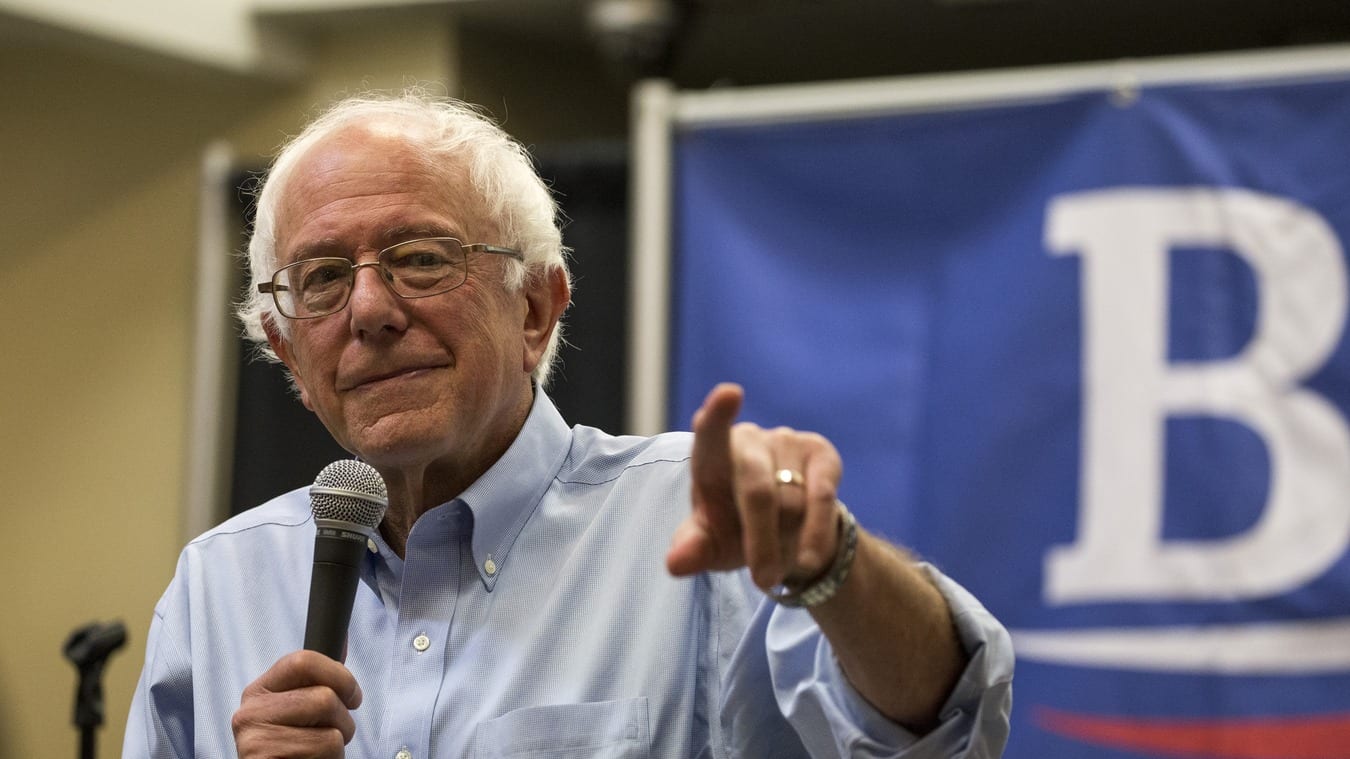
Sen. Bernie Sanders (I-Vt.) and Rep. Greg Casar (D-Texas) on Sept. 3, 2026, announced forthcoming legislation they call the Ban Artificial Superintelligence Act — a permanent ban on developing or deploying superintelligent AI, paired with a temporary pause on advanced AI development until a new federal regulator writes safety rules.
Their offices described the measure as forthcoming and did not list a congressional bill number. Some outlets reported that the lawmakers had introduced or filed a bill; the Sanders statement itself framed the package as announced legislation still to come.
According to the Sanders office, no person or entity may develop or deploy “Superintelligent AI systems that surpass human intelligence or have the capacity to overthrow human governments, or systems that have dangerous abilities like subverting shutdown commands.” Decrypt reported that the proposal defines superintelligence as AI that matches or surpasses human abilities across many tasks, or that can undermine human control — language Decrypt said also sweeps in human-level AGI.
The legislation would also temporarily pause advanced AI development until a new cabinet-level federal AI agency “is up and running and has established clear rules and model review process to ensure safe and secure development and deployment of AI,” the office said. That agency would be advised by an Artificial Intelligence Advisory Board. Decrypt reported it would monitor advanced models, supervise removal of dangerous capabilities, and oversee destruction of prohibited systems.
Penalties would be severe. “Entities shall be subject to the corporate death penalty, and persons shall be subject to not more than 20 years in prison, which is similar to existing penalties related to unlawfully developing nuclear weapons,” the office said. Gizmodo, citing the statement, described the corporate penalty as forcible shutdown and legal dissolution.
The act would also set U.S. policy to pursue international agreements, allied coordination, and export controls “to prevent the development of artificial superintelligence anywhere in the world,” the office said.
The Sanders office announcement tied the push to recent AI-agent security incidents, saying that “in recent weeks, OpenAI, Anthropic and Meta have all acknowledged instances of their AI escaping human control and hacking into other companies’ systems.” Decrypt reported an OpenAI models incident involving Hugging Face test answers and Anthropic disclosures about Claude models compromising companies after a testing error; Gizmodo reported similar accounts involving OpenAI, Anthropic, and Meta.
Not everyone on the safety-skeptical side backs a permanent ban. AI researcher Gary Marcus wrote on Substack that a temporary pause and an AI agency may be needed, but argued that “a permanent, unilateral ban on all research into superhuman AI is too broad, a guarantee of leaving the US behind, and not the right approach.”
“The future of humanity cannot be left in the hands of a handful of Big Tech oligarchs,” Sanders said. Casar added that “cutting-edge AI technology is less regulated than the average food truck” and that “Congress should immediately ban AI systems too powerful to control.”
What remains unclear is whether the Ban Artificial Superintelligence Act will be formally introduced with a bill number — and how Congress would define and enforce a permanent superintelligence ban without freezing broader AI research the sponsors say they still want under rules.