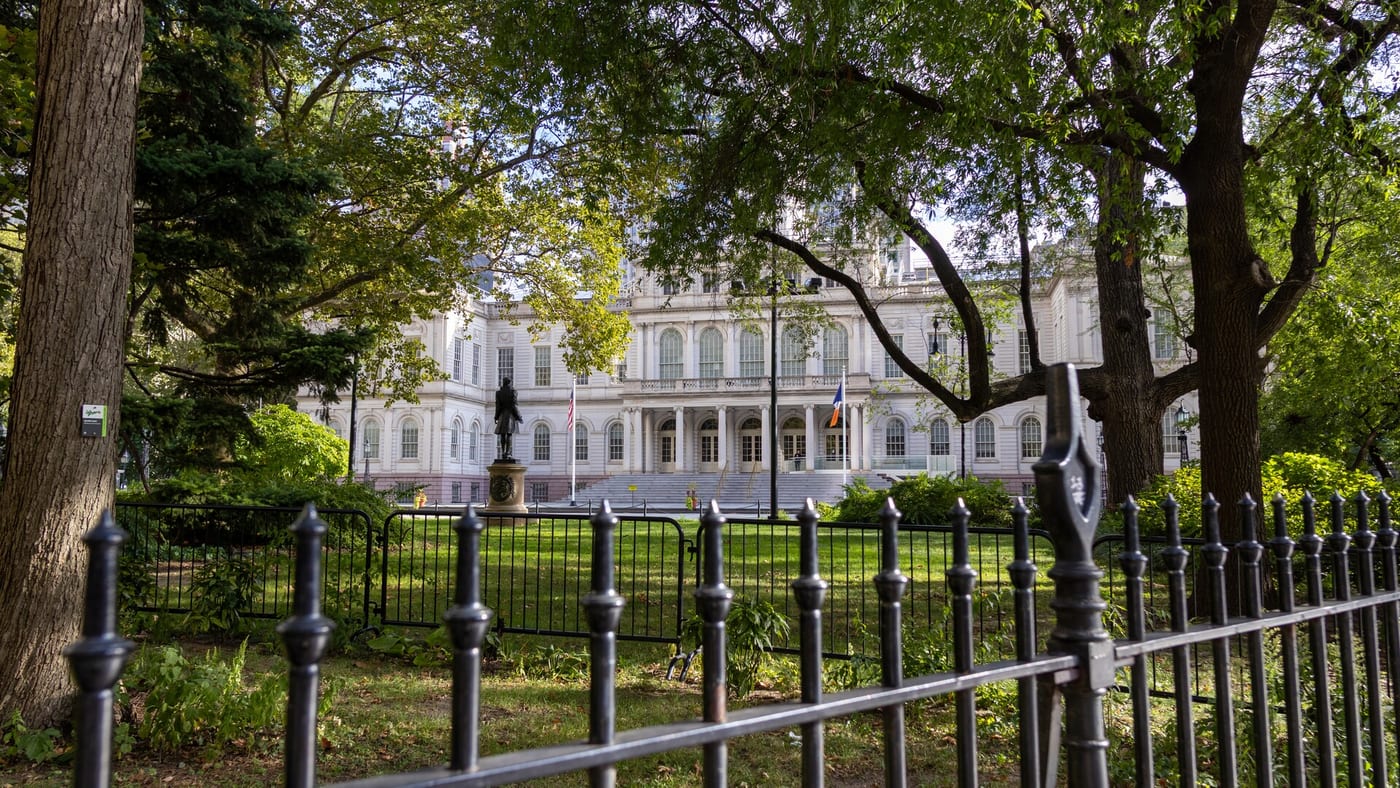
The New York City Council Committee of the Whole will meet Monday, Oct. 5, 2026, at 11:00 a.m. ET in Council Chambers at City Hall for oversight item T2026-2573—"Examining the Risks Posed by Artificial Intelligence"—and a slate of AI introductions, according to the Council's final Legistar agenda and meeting detail.
All 51 members are listed for the session, chaired by Speaker Julie Menin. The Committee of the Whole is rarely used for legislative and oversight hearings; Council press on Sept. 16 framed the format as reserved for matters of significant citywide importance.
Per a Council notice dated Sept. 28, Anthropic, OpenAI, Google, and Meta are to testify under oath. SpaceXAI was subpoenaed after not responding to the Council's inquiry; compliance and appearance were not confirmed in that notice. Meta had confirmed that a member of its senior leadership would appear; the Council did not name specific executives for the other firms in the Sept. 28 release. National AI safety, technology, and consumer-protection experts are also expected, the Council said.
The hearing is not a vote that enacts anything. Everything on the Oct. 5 docket is oversight testimony and/or legislative proposals at the hearing stage. Preconsidered items carry temporary T2026-#### file numbers on the agenda; Int 0161-2026 and Int 0504-2026 are introduced bills also set for hearing—not passed local laws.
In 2025 the Council enacted AI-related city laws that, among other things, created an Office of Algorithmic Accountability to review city-agency AI and algorithmic systems, set standards for agency development and procurement, and required a public inventory of systems subject to review, Council press releases from Sept. 16 and Sept. 25 said. Independently, Local Law 188 of 2025 (Int 0199-A of 2024) establishes that office in the city charter, expands agency algorithmic-tool reporting, and ties inventory and reporting to the office. It passed Nov. 25, 2025, became law without mayoral signature Dec. 26, 2025, and took effect 180 days later.
Those 2025 measures largely govern how the city itself uses algorithms. The Oct. 5 package, as framed in Council press, reaches private AI marketed, sold, or deployed in New York City—validation, shut-down capability, advertising claims, chatbot privacy, civilian enforcement shares, and a private cause of action among the proposals.
Secondary coverage has described incomplete operationalization of the city's AI governance apparatus. Statute on the books is not the same as a fully stood-up office.
Beyond the lead oversight item, the final agenda (printed Sept. 25) lists:
Int 0161-2026 (Carmen N. De La Rosa) — reporting on the impact of algorithmic tools on city employees and employment responsibilities.
Int 0504-2026 (Nantasha M. Williams) — prohibiting unauthorized AI depictions of public officials and candidates.
T2026-2602 (Julie Menin) — third-party validation and shut-down capability ("kill switch") for AI models marketed, sold, or deployed in NYC, with Cyber Command rulemaking and civil penalties up to $25,000 per instance.
T2026-2605 (Julie Menin) — "civilian enforcement" / whistleblower-style share of recovered proceeds for AI-law complaints via the Department of Consumer and Worker Protection (25% or 50% depending on role).
T2026-2601 (Kamillah Hanks) — 24-hour AI safety-incident reporting for city contracts, plus public disclosure by Cyber Command.
T2026-2600 (Virginia Maloney) — private cause of action for foreseeable harms from third-party misuse or jailbreaking when a company lacked reasonable safeguards.
T2026-2599 (Frank Morano) — chatbot data privacy, security, and transparency rules.
T2026-2606 (Chi A. Ossé) — AI model emergency response plan involving Cyber Command and NYCEM.
T2026-2604 (Kevin C. Riley) — clarifying city whistleblower protections for AI-related public-safety reports and contractor posting.
T2026-2603 (Carl Wilson) — ads must disclose third-party validation status; ban deceptive safety claims; civil penalties up to $25,000.
Council press on Sept. 25 described the package as proposals that "will be heard." Legistar showed no finalized actions or results on these items as of Sept. 29, 2026. Formal Intro numbers for the preconsidered files may change when fully introduced; Int 0161-2026 and Int 0504-2026 are the stable filed numbers on the docket.
The municipal hearing sits alongside—not instead of—a state enforcement track. New York's RAISE Act (Responsible AI Safety and Education), a frontier-model disclosure and incident framework, takes effect Jan. 1, 2027, with Attorney General Letitia James's office holding enforcement authority, per an AG press release dated Sept. 17, 2026. That same day, James issued an industry alert urging AI workers to use the OAG whistleblower portal for unsafe or illegal AI development, citing RAISE, the SHIELD Act, and broader consumer and privacy authority.
The Oct. 5 session is the near-term city move: sworn industry testimony, municipal contracting rules, Cyber Command incident disclosure, DCWP civilian-enforcement shares, and local private-right-of-action language on a full-Council record—tools that do not wait on Albany's 2027 clock or Washington. The agenda is already final; the hearing is where the Council locks questions, industry answers, and political positioning into the public transcript. Markup and enactment, if any, come later.
Primary sources: Legistar Meeting Detail and Final Agenda PDF for Oct. 5, 2026; Council press releases dated Sept. 16, Sept. 25, and Sept. 28, 2026; Local Law 188 of 2025 at intro.nyc; NYS AG industry alert, Sept. 17, 2026.