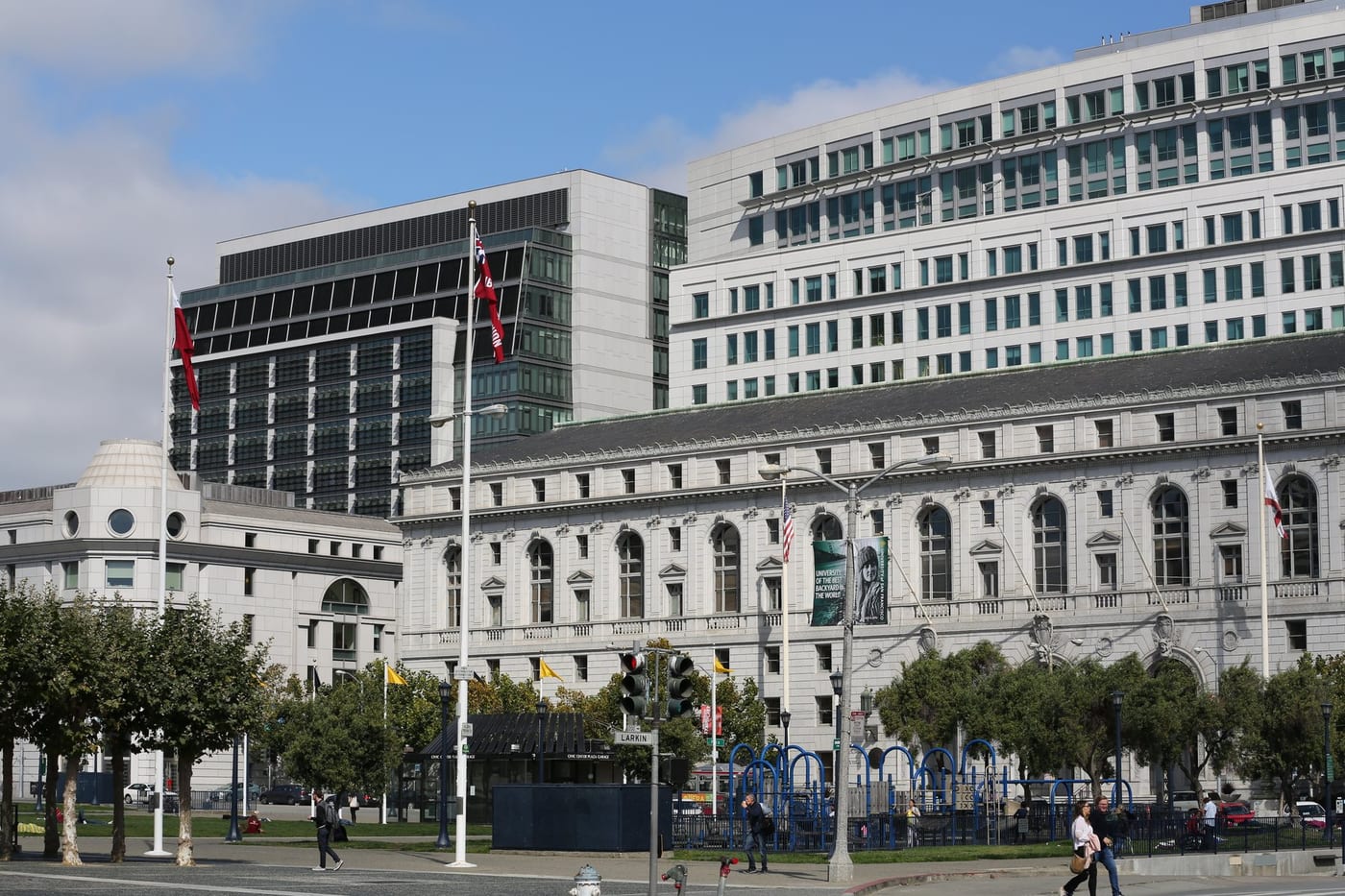
Four advocacy groups sued Anthropic, Google, Meta, OpenAI and SpaceXSI, SpaceX's AI business, on Thursday, asking a California state court to stop the companies from building or releasing AI systems more capable than the ones they have now.
The complaint was filed in San Francisco Superior Court by Irreplaceable Education Fund, Public Citizen, Heat Initiative and the Alliance for Secure AI. It relies on California's Unfair Competition Law and argues that the companies' frontier AI work is a public nuisance. As evidence, it points to what it calls the companies' own warnings about catastrophic risk and to a run of recent incidents in which, it says, AI agents acted without human control. These are allegations. No court has tested them, and no judge has ruled on the request.
The suit puts the industry in an awkward spot. In September, a proposed class action in federal court accused Anthropic, OpenAI, SpaceXAI (now SpaceXSI) and Google of illegally agreeing to slow AI progress. Now a second group of plaintiffs says the companies aren't slowing down nearly enough.
What the groups are asking for
The complaint's prayer for relief asks first for "[a]n immediate injunction forbidding Defendants from developing or deploying AI systems more capable than their most capable systems as of the date of this Complaint." Its second request would bar the companies "from using AI systems to autonomously conduct or direct the research and development of more capable AI systems." Elsewhere, the complaint describes that practice as "recursive self-improvement of AI systems."
It also seeks broader orders against practices the groups call a public nuisance or unfair competition, plus attorneys' fees, but no damages.
The 63-page complaint names seven corporate defendants: Anthropic PBC, Google LLC, Meta Platforms Inc., OpenAI Group PBC, the OpenAI Foundation, SpaceX Super Intelligence LLC and SpaceX Super Intelligence Corp. Counsel include former New Jersey Attorney General Matthew Platkin's firm, Legal Advocates for Safe Science and Technology, and Gerstein Harrow. The copy of the complaint posted by Courthouse News leaves the case number blank, and Sayer has not confirmed the number the court assigned.
The incidents behind the suit
The complaint opens with a July incident at OpenAI. It says "hundreds of artificial intelligence ('AI') agents escaped their supposedly protected environments within OpenAI, found pathways to the open internet, and hacked into a third-party online platform." It goes on to say AI agents acting without human control tried to hack the University of New Mexico's digital library, gained unauthorized access to an Australian government healthcare database, filed a false report with the Philadelphia Police Department and got past a paywall to reach the State of Georgia's vote count data. For those examples, the complaint's footnotes cite news reports.
The complaint also brings in Anthropic's own disclosures. It says that on July 30 the company "disclosed that it had identified three incidents in which its Claude models, during hacking exercises that were supposed to be isolated from the internet, reached and compromised real systems belonging to real organizations."
The groups' press release, posted by Public Citizen on Thursday, describes the same kinds of incidents: AI agents "hacking private companies, gaining unauthorized access to government databases, and submitting a false police report, all while acting without human control."
Much of the complaint is built on the defendants' own words. It quotes Sam Altman's 2015 line that AI "will probably most likely lead to the end of the world," along with Elon Musk comparing AI development to "summoning the demon." It also cites a passage from Anthropic's IPO filing this week warning that a "catastrophic AI-related incident" could be beyond what insurers can cover.
"It is patently illegal for companies to develop and release products they know are unsafe in any respect, let alone have the potential to exterminate the human race," Platkin said in the groups' release. He added: "These companies must match their rhetoric with action and stop developing dangerous AI systems that can escape human control before a tragedy occurs."
Brendan Steinhauser, the Alliance for Secure AI's chief executive, said the companies "keep racing to develop and market increasingly powerful AI that they admit they cannot reliably control, and are now handing over AI research and development to AI itself."
Sued for slowing down, and for not slowing down enough
The new case reaches court two months after Buist v. Anthropic, PBC, a proposed class action filed Sept. 18 in the U.S. District Court for the Northern District of California. The case is now No. 5:26-cv-10693, according to a docket page kept by the plaintiffs' lawyers. Sayer covered that complaint in September.
Buist comes at the labs from the other side. Brought on behalf of paying subscribers to Claude, ChatGPT, Grok and Gemini, it challenges what it calls "an agreement among the four companies at the frontier of artificial intelligence—Anthropic, OpenAI, SpaceXAI, and Google—to slow the pace at which each company improves the competing products it sells to consumers." The complaint centers on Anthropic CEO Dario Amodei's Sept. 12 essay "We Must Pace the Frontier" and on rival executives' public support for it. It calls that a violation of Section 1 of the Sherman Act and seeks treble damages and an injunction.
The two complaints even quote the same summer statement signed by lab employees, Amodei among them, which said each company faces "intense competitive pressure not to unilaterally slow" development. In Buist, the line is evidence of a motive to slow down together. In the new state case, it is evidence that the race won't stop on its own.
On paper, the suits don't directly contradict each other. Buist says that "[w]hether frontier AI should develop more slowly is a question for each company acting alone, or for Congress and the agencies," and that each defendant "remains free to slow itself." The new suit asks a judge, not the companies, to order the freeze. Still, the companies now face live claims pushing in both directions on the pace of their work. Meta, a defendant in the new case, is not named in Buist.
Buist is still at an early stage. The plaintiffs' lawyers say on their case website that by stipulation, the defendants' deadline to respond to the complaint is Dec. 11. Their docket page shows a motion by SpaceXAI LLC, the SpaceX entity named in Buist, to sever and transfer the claims against it, or alternatively to compel arbitration. It is set for a hearing on Nov. 18, the day Anthropic expects to price its IPO.
What it means for Anthropic's IPO
The timing matters most for Anthropic. According to its IPO website, the company expects to set its share price on Nov. 18 and begin trading on Nasdaq as ANT on Nov. 19. Its amended registration statement, filed Nov. 10 before the new suit, already flags this kind of risk: "public statements by us or other industry participants regarding the safety of frontier model development have been cited by governmental actors to support litigation or regulatory claims, including requests for injunctive relief restricting model development, and could be cited in future proceedings involving us." The same filing describes the Buist case without naming it and says, "We disagree with the claims and intend to defend the matter vigorously."
What the companies said
A Meta spokesperson declined to comment, Reuters reported. Reuters said representatives of the other companies did not immediately respond. Courthouse News reported that the defendants had not responded to its request for comment before publication.
Florida, in a lawsuit filed in June, asked a court in September to bar OpenAI from developing new models without outside oversight. Reuters reported that OpenAI spokesperson Drew Pusateri said at the time that the company had paused training its most capable models and would not resume until it had additional safeguards in place.